Ellie Passivhaus  ·  Fact sheet

What is a Passivhaus?

It is a performance standard, not a style. A Passivhaus has to prove, after it is built, that it uses a fraction of the energy a conventional building needs to stay warm, cool and ventilated. Everything else follows from that one requirement.

Ellie is certified by PHIUS, the Passive House Institute US, and is the largest Passivhaus apartment building in Seattle. The certification is the boring part. What follows is what it actually changes about living here, one principle at a time.

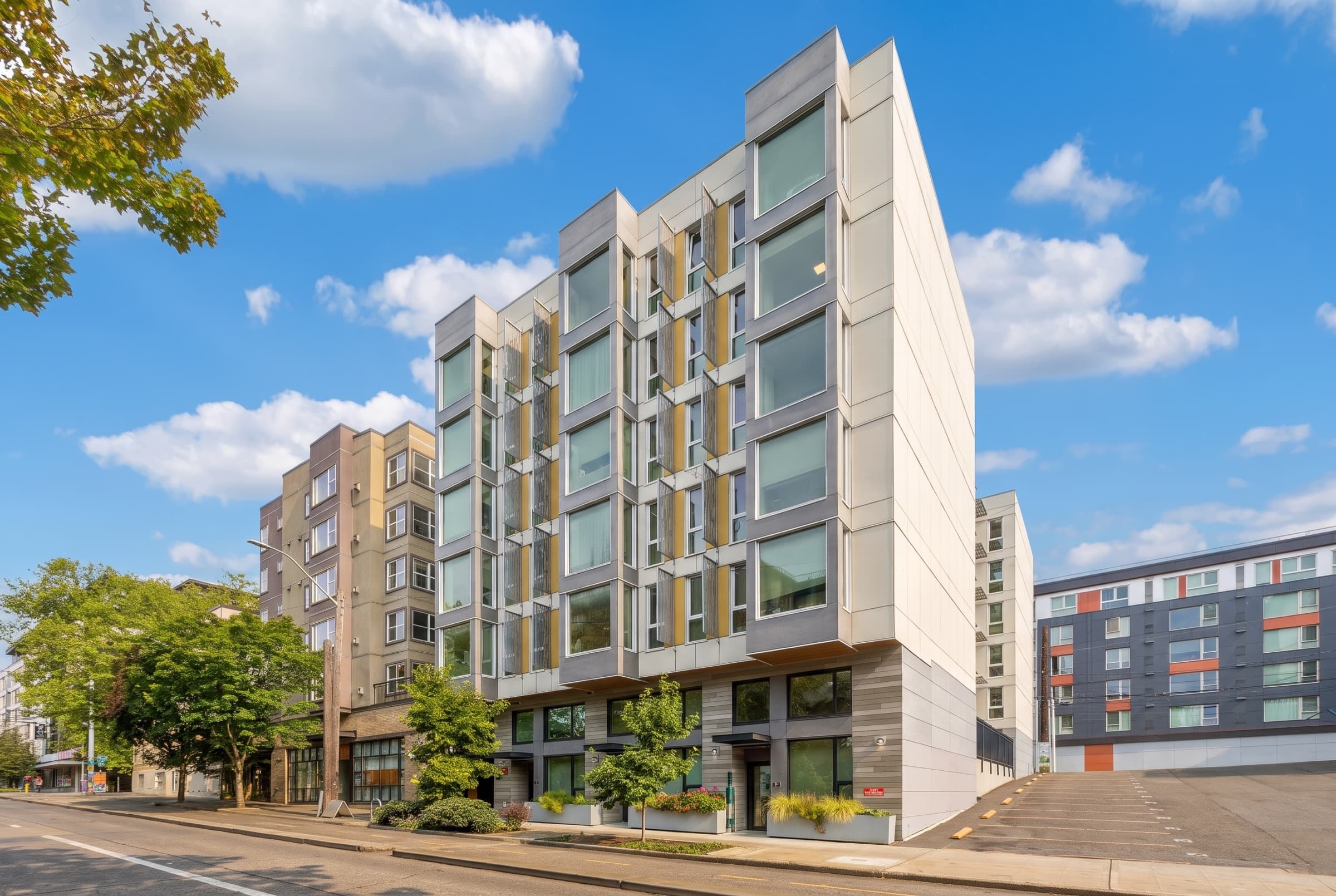
Ellie from Queen Anne Ave N, grey and gold panels and deep set bay windows standing over the live/work units

The envelope that does it: continuous insulation behind the panels, and triple glazed windows deep enough to sit in.

The five things that make it one.

01

A continuous layer of insulation
The insulation wraps the building without interruption, floor slab to roof.

What you notice. The temperature in your home barely moves, so rooms do not have a cold side and a warm side.

02

An airtight envelope
The building is sealed and pressure-tested, so air moves through the ventilation system rather than through gaps.

What you notice. No draughts, no street grit on the sills, and the construction that holds heat in holds sound out.

03

Triple glazed windows
Three panes with insulated frames, specified and placed for the way the sun actually hits this site.

What you notice. You can sit beside a window in February. On an arena night, the window stays shut because it never needed to be open.

04

Heat recovery ventilation
A ventilator runs continuously, pulling stale air out and filtered fresh air in, and transferring the heat between the two streams.

What you notice. Fresh filtered air whether or not you open a window, which is the week in August that every Seattle renter remembers.

05

No thermal bridges
Balconies, parapets and structural connections are detailed so heat has no shortcut through the envelope.

What you notice. No cold corners, and none of the condensation and mould that follows them.

Near net zero, with the array to prove it.

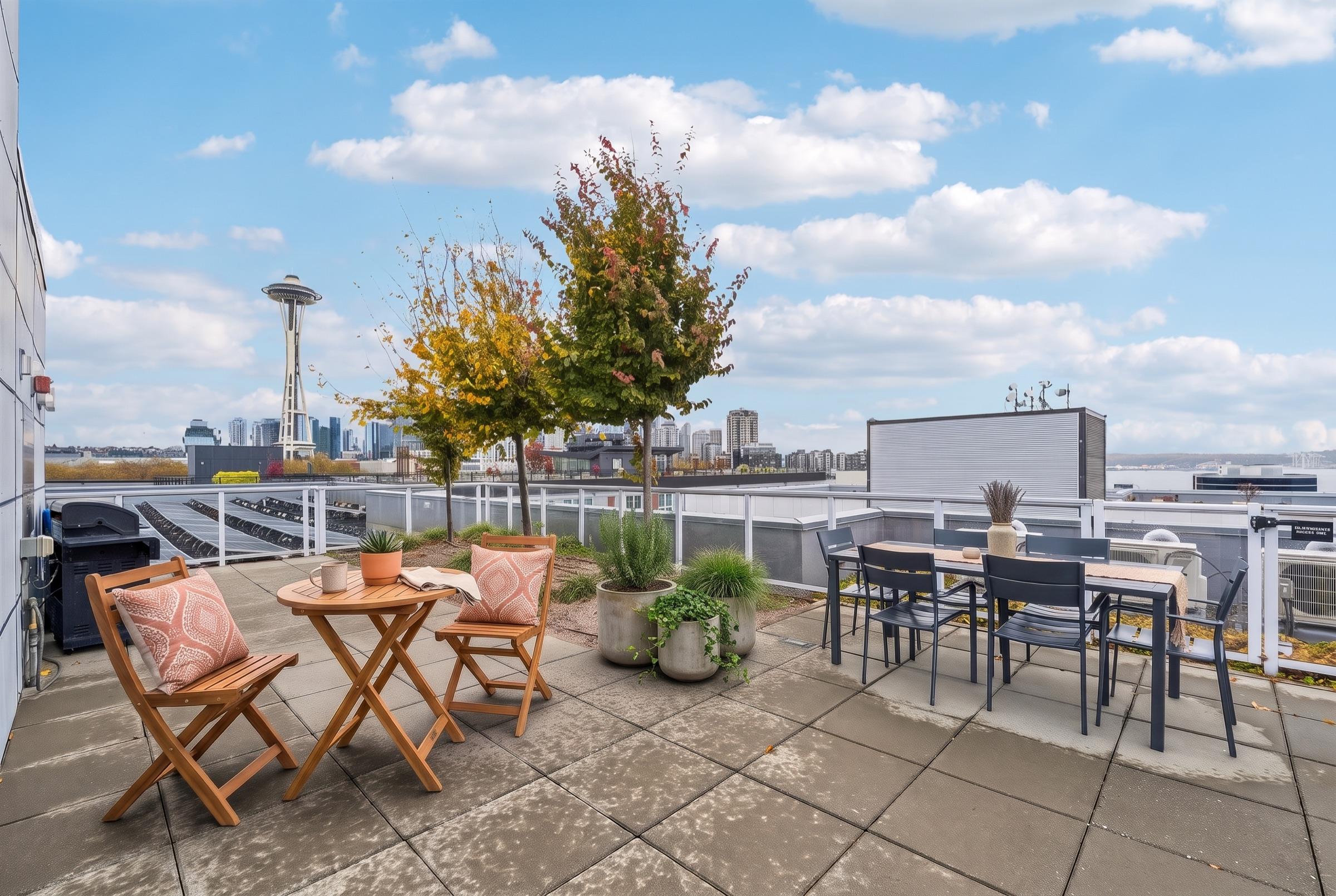
A solar array faces the Space Needle from Ellie's roof, beside the planted sedum meadow. Because the envelope has already cut the heating and cooling load to a fraction of a conventional building's, what the array makes goes a long way. That is the whole arithmetic of a near net zero building: use very little, then make some of it yourself.

The solar array on Ellie's roof facing the Space Needle, with the grill and the rooftop dining table beside it

Questions people actually ask.

What is a Passivhaus?

Passivhaus, or Passive House, is a building performance standard rather than an architectural style. It sets a strict cap on how much energy a building may use for heating and cooling, and a building only earns the certification after it is built and tested. The result is a home that holds its temperature, ventilates continuously, and costs very little to run.

Is Ellie actually certified?

Yes. Ellie is certified by PHIUS, the Passive House Institute US, which requires a blower-door airtightness test on the finished building. It is the largest Passivhaus apartment building in Seattle and the third to open in the city.

Does a sealed building mean stuffy air?

The opposite. A Passivhaus ventilates more than a conventional building, not less. Heat recovery ventilation runs continuously, replacing indoor air with filtered outdoor air around the clock, and recovering the heat from the air on its way out. Conventional buildings rely on leaks and open windows, which only work when the weather and the street outside allow it.

Can I still open the windows?

Yes. Every home has operable triple glazed windows. The difference is that you open them because you want to, not because the air needs it.

What does it do to the power bill?

Ellie is a near net zero building with a solar array on the roof. Because the envelope does most of the work, the heating and cooling load is small, and the bill stays close to flat from January through July. That is not how a 400 square foot apartment usually behaves.

What happens in a heat wave or a power outage?

June 2021 reached 108 degrees in Seattle, and most apartments in the city still have no cooling. Ellie has cooling, and because the envelope is airtight and heavily insulated, it holds its temperature for a long time without any power at all.

Is it quieter than a normal building?

Noticeably. Airtightness and triple glazing are specified for energy, but they are also the two things that stop sound. Ellie sits one block from Climate Pledge Arena, where nineteen thousand people arrive on a game night, and you can keep the windows shut through all of it.
Come and listen to one.

(425) 333-2563  ·  elliepassivhauswa-w@m.knck.io